

Hormone Replacement Therapy
Your hormones shape your energy, mood, sleep, weight, and libido, and when they’re out of balance, you feel it. Revibe’s hormone replacement therapy (HRT) programs restore estrogen, progesterone, and testosterone to healthy levels as they decline or fluctuate during perimenopause and menopause. HRT isn’t one-size-fits-all: the right plan depends on your symptoms, age, health history, risk factors, menstrual status, and treatment goals.

symptoms
Do You Recognize the Signs?
Fatigue & low energy
Mood swings or irritability
Low libido & sex discomfort
Weight gain issues
Poor sleep & night sweats
Brain fog & concentration
Learn More
Potential Benefits of Hormone Replacement Therapy Treatment
Restored energy, mood, and mental clarity
Balanced estrogen, progesterone, and testosterone
Better sleep and fewer hot flashes or night sweats
Improved libido and sexual comfort
Support for healthy weight and metabolism
Personalized, labs-based plans monitored by providers
treatment options
Explore Your Treatment
Hormone Optimization
Testosterone Replacement Therapy for Women
Testosterone isn't just for men — women need it too. Low levels of testosterone in women can sap libido, energy, mood, and strength. Revibe's providers may use low-dose testosterone therapy to restore balance and vitality, tailored to your labs and symptoms. Feel sharper, stronger, and more like yourself when used as part of an overall hormone replacement therapy program.
Testosterone isn’t just for men — women need it too. Low levels of testosterone in women can sap libido, energy, mood, and strength. Revibe’s providers may use low-dose testosterone therapy to restore balance and vitality, tailored to your labs and symptoms. Feel sharper, stronger, and more like yourself when used as part of an overall hormone replacement therapy program.
Hormone Optimization
Progesterone Replacement Therapy
Progesterone balances estrogen, supports restful sleep, steadies mood, and protects the uterine lining during hormone therapy. Revibe's providers may prescribe progesterone replacement tailored to your stage and symptoms. If hot flashes, night sweats, poor sleep, low libido, mood changes, or vaginal dryness are affecting your life, Revibe's providers can determine if progesterone hormone therapy is right for you.
Progesterone balances estrogen, supports restful sleep, steadies mood, and protects the uterine lining during hormone therapy. Revibe’s providers may prescribe progesterone replacement tailored to your stage and symptoms. If hot flashes, night sweats, poor sleep, low libido, mood changes, or vaginal dryness are affecting your life, Revibe’s providers can determine if progesterone hormone therapy is right for you.
Hormone Optimization
Estrogen Replacement Therapy
Estrogen replacement therapy restores the hormone that regulates temperature, mood, bone strength, and vaginal health easing the most disruptive symptoms of menopause. If hot flashes, night sweats, poor sleep, low libido, mood changes, or vaginal dryness are affecting your life, Revibe Health can help you understand your options.
Estrogen replacement therapy restores the hormone that regulates temperature, mood, bone strength, and vaginal health easing the most disruptive symptoms of menopause. If hot flashes, night sweats, poor sleep, low libido, mood changes, or vaginal dryness are affecting your life, Revibe Health can help you understand your options.
Hormone Optimization
Combination Hormone Replacement Therapy
Hormone replacement therapy for women is a medical treatment used to supplement hormones that decline or fluctuate during perimenopause and menopause. Depending on the patient, treatment may include estrogen, progesterone, testosterone, or a combination of therapies based on your symptoms, lab findings, medical history, and whether HRT treatment is clinically appropriate.
Hormone replacement therapy for women is a medical treatment used to supplement hormones that decline or fluctuate during perimenopause and menopause. Depending on the patient, treatment may include estrogen, progesterone, testosterone, or a combination of therapies based on your symptoms, lab findings, medical history, and whether HRT treatment is clinically appropriate.
Hormone Optimization
Oxytocin for Women
Oxytocin, known as the ‘connection’ hormone can support arousal, desire, and emotional intimacy for women experiencing low libido. Oxytocin occurs naturally but like other hormones can decline with age. Revibe's providers may prescribe compounded oxytocin when clinically appropriate, often alongside other hormone replacement therapy.
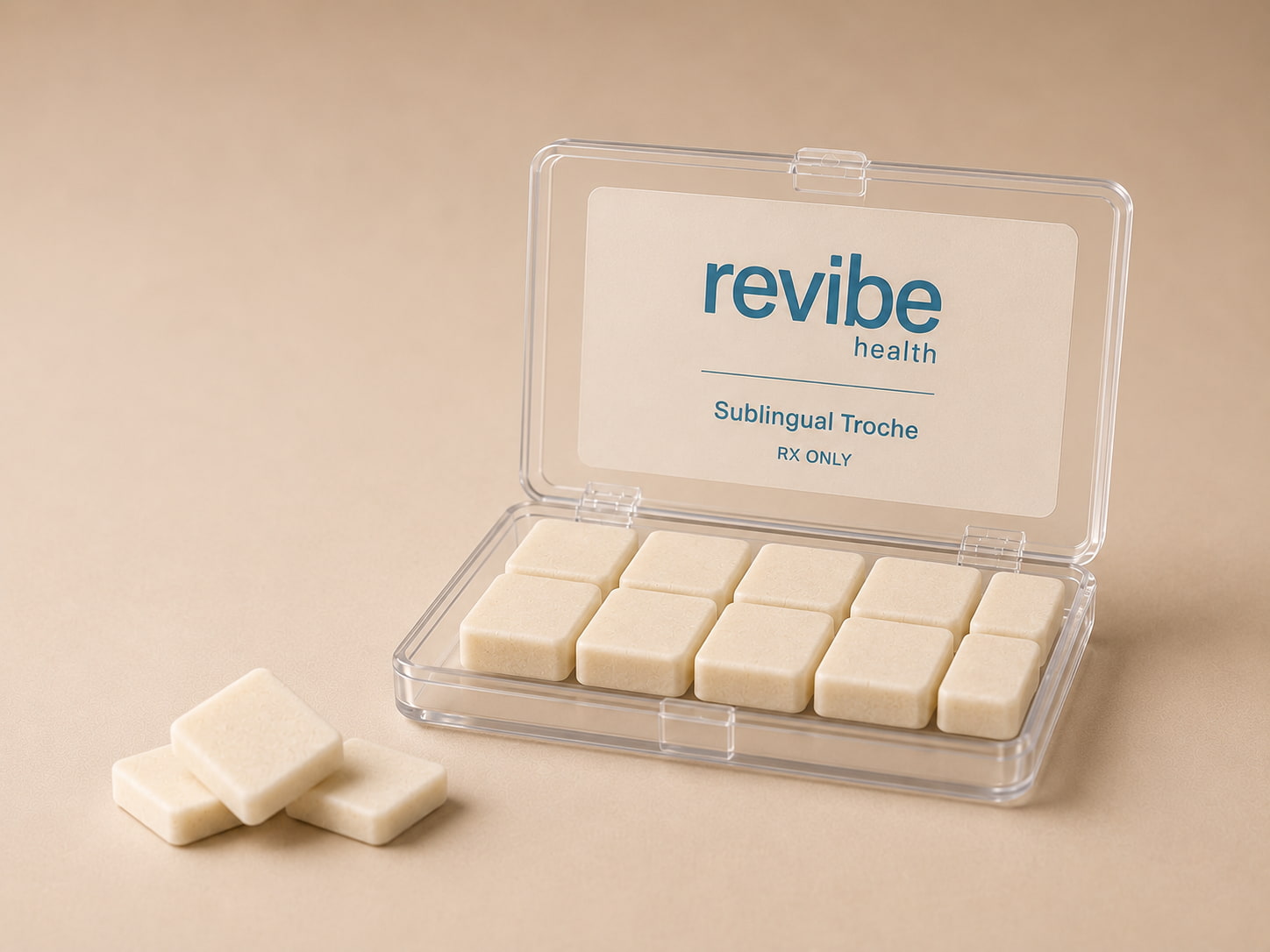
Oxytocin, known as the ‘connection’ hormone can support arousal, desire, and emotional intimacy for women experiencing low libido. Oxytocin occurs naturally but like other hormones can decline with age. Revibe’s providers may prescribe compounded oxytocin when clinically appropriate, often alongside other hormone replacement therapy.
Our Approach to Hormone Replacement Therapy
HRT Is Personal. Your Care Should Be Too.
Many women are told their symptoms are “just aging” or something they must tolerate. But hot flashes, poor sleep, low libido, mood changes, vaginal dryness, and brain fog can affect your relationships, confidence, work, and daily life.
Hormone therapy is not right for everyone, but for many qualified women, it may be an effective part of a broader care plan. Revibe Health helps you understand your options, evaluate your symptoms, and make informed decisions with a licensed medical provder.
Why Choose Revibe Health for Women’s HRT?
Experienced Provider-guided hormone care
Your treatment is guided by licensed medical providers who evaluate your symptoms, health history, lab work, and treatment goals.
Personalized plans, not generic protocols
Hormone changes are different for every woman. Revibe Health uses an individualized approach rather than a one-size-fits-all plan.
Lab-informed treatment decisions
When lab work is appropriate, your provider can use it to better understand your hormone profile and monitor treatment safely.
Convenient telemedicine options
Revibe Health offers convenient access to care, including telemedicine options for qualified patients. Hormone changes are different for every woman. Revibe Health uses an individualized approach rather than a one-size-fits-all plan.
Experience patients can trust
Revibe Health is part of a healthcare organization serving patients since 2011, with a focus on hormone-related care, weight management, and wellness support.
Important Information about Hormones
Common Symptoms of Hormone Changes in Women
Hormone changes can show up differently for every woman. Some symptoms are sudden and disruptive, while others build gradually over time.
Symptoms often associated with perimenopause may include:
- Hot flashes
- Night sweats
- Irregular Periods
- Mood swings or irritability
- Brain fog
- Trouble concentrating
- Poor sleep or insomnia
- Migraines or headaches
- Breast tenderness
- Low libido
- Fatigue
- Changes in body composition
Symptoms often associated with menopause may include:
- Vaginal dryness
- Painful intercourse
- Recurrent urinary symptoms or UTIs
- Continued hot flashes or night sweats
- Lower libido
- Reduced muscle tone or strength
- Decreased bone density
- Mood changes
- Skin and tissue changes
- Lower energy
condition treatments
Treatment Options for Hormone Replacement Therapy
All treatment plans are prescribed by licensed providers following a comprehensive medical evaluation and diagnostic testing.
-
Testosterone Replacement Therapy for WomenTestosterone isn’t just for men — women need it too. Low levels of testosterone in women can sap libido, energy, mood, and strength. Revibe’s providers may use low-dose testosterone therapy to restore balance and vitality, tailored to your labs and symptoms. Feel sharper, stronger, and more like yourself when used as part of an overall hormone replacement therapy program.
-
Progesterone Replacement TherapyProgesterone balances estrogen, supports restful sleep, steadies mood, and protects the uterine lining during hormone therapy. Revibe’s providers may prescribe progesterone replacement tailored to your stage and symptoms. If hot flashes, night sweats, poor sleep, low libido, mood changes, or vaginal dryness are affecting your life, Revibe’s providers can determine if progesterone hormone therapy is right for you.
-
Estrogen Replacement TherapyEstrogen replacement therapy restores the hormone that regulates temperature, mood, bone strength, and vaginal health easing the most disruptive symptoms of menopause. If hot flashes, night sweats, poor sleep, low libido, mood changes, or vaginal dryness are affecting your life, Revibe Health can help you understand your options.
-
Combination Hormone Replacement TherapyHormone replacement therapy for women is a medical treatment used to supplement hormones that decline or fluctuate during perimenopause and menopause. Depending on the patient, treatment may include estrogen, progesterone, testosterone, or a combination of therapies based on your symptoms, lab findings, medical history, and whether HRT treatment is clinically appropriate.
-
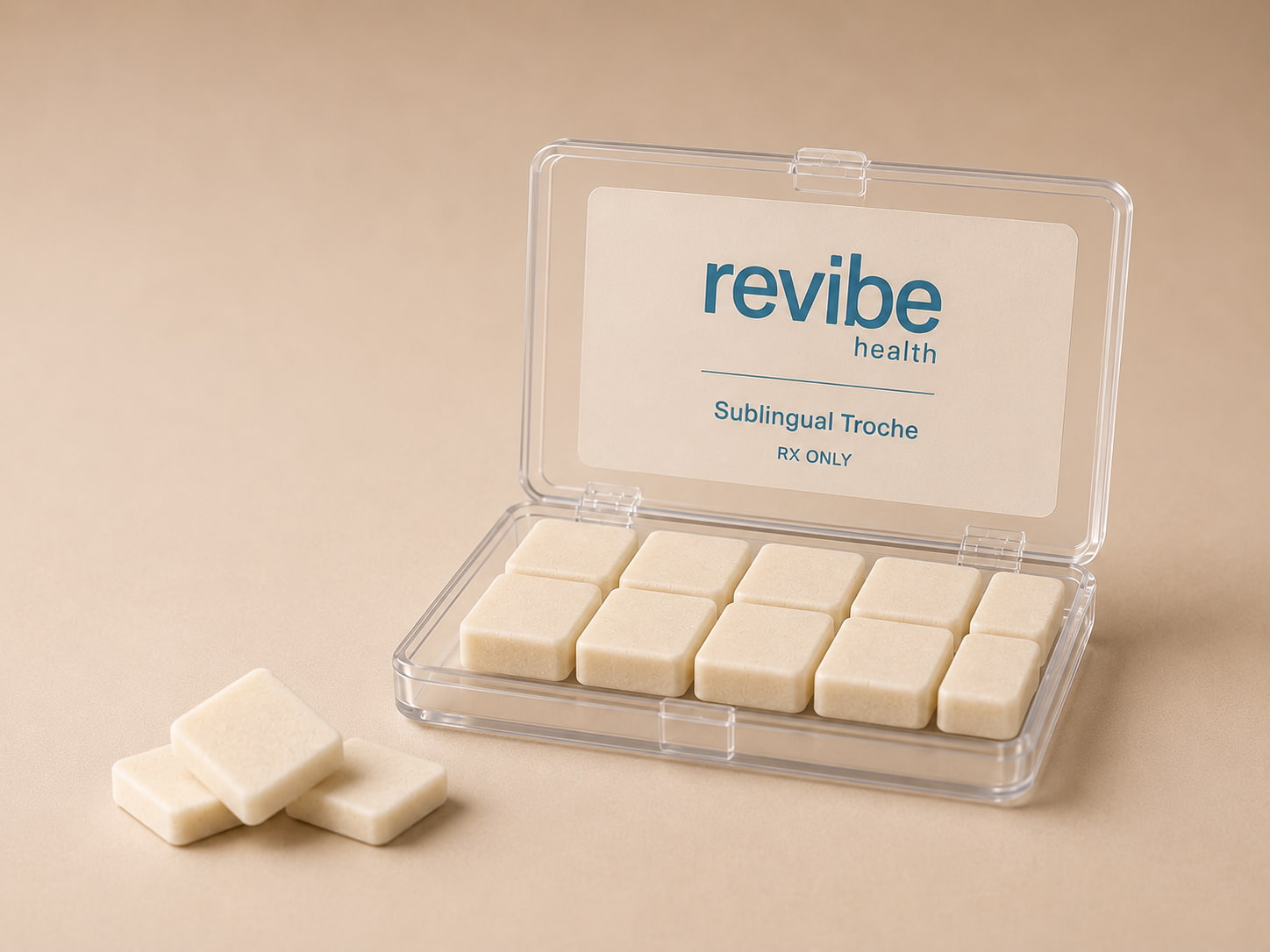
Oxytocin for WomenOxytocin, known as the ‘connection’ hormone can support arousal, desire, and emotional intimacy for women experiencing low libido. Oxytocin occurs naturally but like other hormones can decline with age. Revibe’s providers may prescribe compounded oxytocin when clinically appropriate, often alongside other hormone replacement therapy.
how it works
Your Path to Feeling Better.

step 01
Book a Consultation
step 02
Diagnostics First

testosterone
0.20
LOW
ng/dl
000 ng/dl
900 ng/dl

step 03
Your Treatment Plan
step 04
Ongoing Support

energy
this month
+25%
Weight : -12 lbs
Mood: +50%
frequently asked questions
Your Questions, Answered
Treatment Options at Revibe Health
Current position statements support hormone therapy for healthy women with bothersome menopausal symptoms who are under age 60 or within ten years of their final menstrual period, where the benefit-to-risk profile is most favorable. Candidacy depends on your symptoms, your age and time since menopause, and your personal and family history, particularly of breast cancer, blood clots, stroke, and heart disease. A Revibe Health provider will review your health history to understand if you are a candidate for HRT therapy.
Systemic estrogen is available as oral tablets, transdermal patches, gels, and creams, and as injections or pellets. Progesterone is most commonly oral micronized capsules taken at bedtime. Localized vaginal estrogen, given as a cream, tablet, or ring, treats vaginal and urinary symptoms with minimal absorption into the bloodstream. The route matters clinically observational evidence associates transdermal estrogen with a lower blood clot risk than oral so it is part of the conversation, not an afterthought. Your Revibe Health provider will discuss the best treatment options with you for your goals and lifestyle.
Current guidance moved away from arbitrary stopping rules. Rather than a fixed maximum duration, the recommendation is periodic reassessment of whether the benefits continue to outweigh the risks for you, taking into account your age, symptoms, and health changes. Some women taper off after a few years; others continue longer with ongoing review.
You will have Revibe Health appointment follow-ups to assess symptom relief, side effects, and any bleeding, with dose adjustments as needed, plus lab work where your provider determines it is clinically useful.
Understanding HRT for Women
Hormone replacement therapy replaces the estrogen and, when the uterus is intact, the progesterone that the ovaries stop producing during the menopause transition. It is the most effective treatment available for hot flashes and night sweats, and it also addresses vaginal dryness, sleep disruption, and bone loss. Revibe’s providers dose therapy to your symptoms and lab work rather than to a standard protocol.
The symptoms most reliably improved by hormone therapy are hot flashes and night sweats, genitourinary symptoms such as vaginal dryness and discomfort with sex, and the sleep disruption that follows from night sweats. Many women also report improvement in mood and energy. Hormone therapy is additionally approved for the prevention of postmenopausal bone loss.
If you still have a uterus, estrogen given on its own causes the uterine lining to thicken, which raises the risk of endometrial hyperplasia and cancer. Adding a progestogen prevents that, which is why combination therapy is standard for women with a uterus. Women who have had a hysterectomy generally use estrogen alone.
The term describes hormones with the same molecular structure as those the body produces estradiol, progesterone, and testosterone. Importantly, “bioidentical” does not by itself mean compounded: several FDA-approved products, including transdermal estradiol and oral micronized progesterone, are body-identical. The word is used loosely in marketing, so ask your provider specifically what is being prescribed and how it is sourced.
Compounded hormone preparations are made by a licensed compounding pharmacy for an individual patient. They are not FDA-approved and are not reviewed by the FDA for safety, effectiveness, or quality, and FDA-approved alternatives are available. Major menopause society guidance recommends FDA-approved products where a suitable one exists, and reserves compounding for situations such as a patient needing a formulary not commercially available. Your Revibe provider will explain which category your prescription falls into and why.
Women produce testosterone throughout life, and levels decline with age. The 2019 Global Consensus Position Statement on Testosterone Therapy for Women concluded that the only evidence-based indication is hypoactive sexual desire disorder in postmenopausal women, using doses that keep blood levels within the normal female range. There is no FDA-approved testosterone product for women in the United States, so any prescription is off-label and provider-directed. Revibe uses lab monitoring to keep dosing personalized and for women who may need to add testosterone to a hormone therapy program.
Safety and Side Effects
The 2002 Women’s Health Initiative findings led to a sharp decline in hormone therapy use, and later analysis showed the results were widely over-generalized. The study population was older than the women who typically seek treatment average age in the sixties, many more than a decade past menopause and used one specific oral formulation. Subsequent analyses stratified by age found a more favorable balance for women starting therapy near the onset of menopause. Current guidance frames the decision as individualized rather than as a blanket yes or no.
Common early side effects include breast tenderness, bloating, spotting or irregular bleeding, headache, and mood changes, most of which settle as your body adjusts or with a dose adjustment. The most common risks reported include blood clots, stroke, and, with long-term combined therapy, an increased risk of breast cancer. Risk varies with your age, the type of hormone, the route of delivery, and how long you have been treated which is why every woman’s experience is unique and why Revibe Health monitors every patient ongoing as part of their all-inclusive program.
Hormone therapy is generally avoided if you have a history of breast cancer or another estrogen-dependent cancer, unexplained vaginal bleeding, active or prior blood clots in the legs or lungs, a history of stroke or heart attack, active liver disease, or known or suspected pregnancy. Your Revibe Health provider will review your full history before prescribing, and non-hormonal options exist for women who are not candidates.
Learn More
Other Treatments Worth Exploring



from the blog
Read More on This Topic
-
Why Healthy Women May Need as Much Testosterone as EstrogenApril 10, 2026
-
A Modern Woman’s Guide to Hormones, Health & Weight ChangesFebruary 25, 2026
-
Testosterone Therapy and Heart Risk: Important Facts Men Should KnowFebruary 9, 2026



No results found.
EXPLORE
Recommended Blogs
-
Why November Is the Time to Take Charge of Your HealthNovember 4, 2025
-
Self Care Tips to Give You the Boost You NeedOctober 16, 2021
-
What to Expect After Booking an Appointment at Revibe HealthJanuary 22, 2025
-
Dry January and What It Could Do For YouFebruary 11, 2025
-
Health Savings and Flexible Spending Accounts – What You Need to KnowDecember 14, 2020