
Oxytocin for Women
Oxytocin for Women May Provide These Health Benefits
Understanding the Treatment.
About Oxytocin for Women
Oxytocin is a naturally occurring hormone involved in bonding, arousal, and emotional connection. Because it plays a role in intimacy and sexual response, some providers prescribe compounded oxytocin off-label to support desire and arousal for women experiencing low libido, usually alongside a broader hormone plan.
The clinical evidence for oxytocin in female sexual function is limited and still emerging, and it is not FDA-approved for this use. It is best viewed as a complementary option your Revibe provider may consider, it is not recommended as a first-line treatment, but rather as a possible supplemental treatment based on your clinical evaluation.
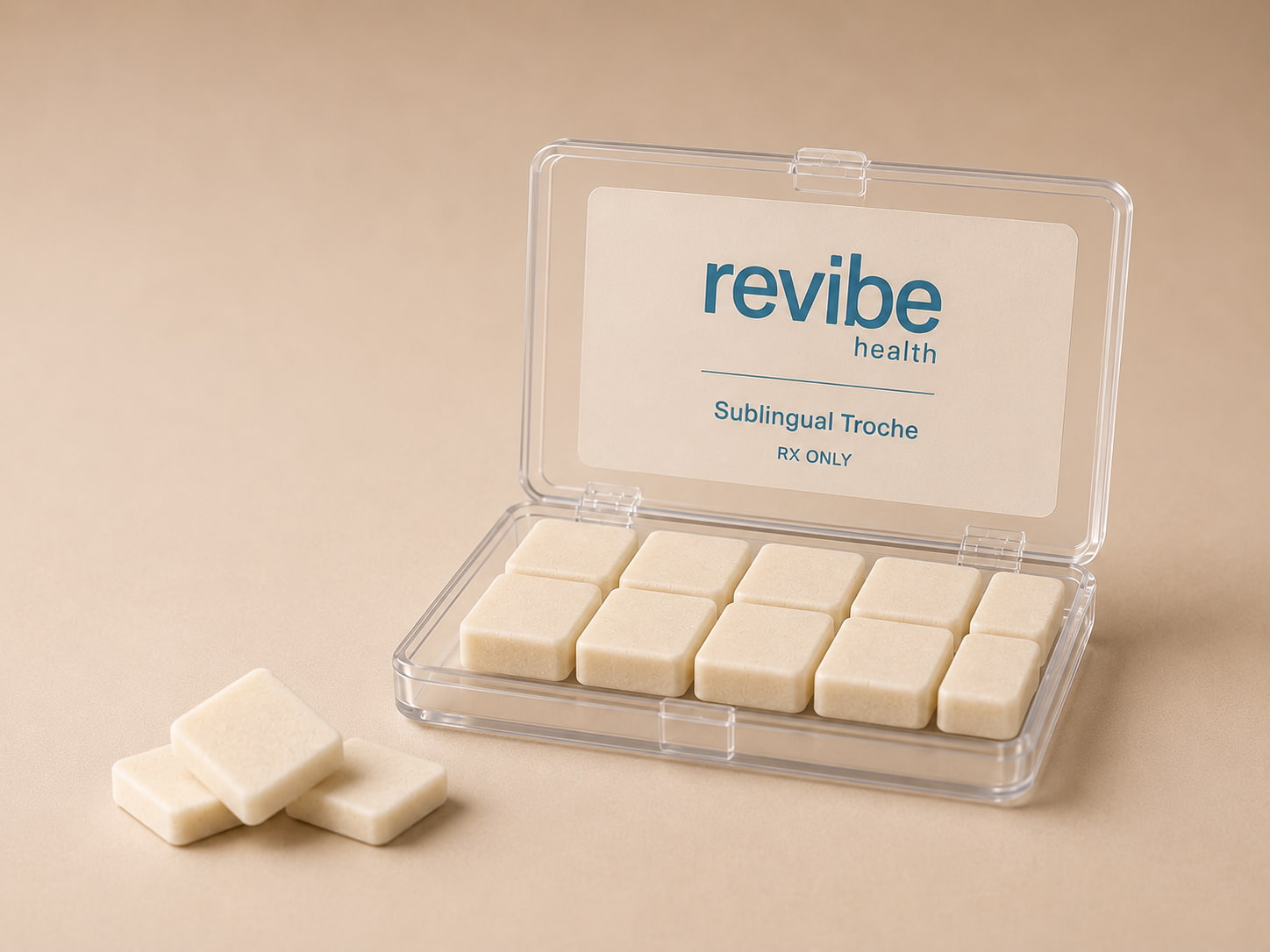
Compounded oxytocin for sexual health is commonly prescribed in convenient forms such as a sublingual or nasal preparation, dosed as directed. Your Revibe provider will determine if the treatment is recommended for you.
A provider may consider oxytocin when reduced desire or arousal is affecting intimacy, particularly during perimenopause or menopause, or as a complement to hormone therapy. It is prescribed only when clinically appropriate for you.
Yes it is often used as one part of a broader, individualized hormone plan rather than on its own. It is recommended that you share your full medication list so your Revibe provider can coordinate care safely.
Because this is an off-label, evidence-limited option, it should be prescribed and monitored only by a licensed provider who has clinically evaluated your health history, symptoms and goals to provide recommended care.
Safety and Side Effects
No. The compounded oxytocin used for sexual health is not FDA-approved for this purpose, and compounded medications are not reviewed by the FDA for safety, effectiveness, or quality. Your Revibe Health provider will provide information about the medication if it is recommended as a treatment in your care plan.
Because therapeutic use for sexual health isn’t extensively studied, its side-effect profile is less well characterized than for established treatments; reported effects are generally mild. Your provider reviews potential risks and monitors your response.
What Our Patient Say.
Other Condition/Treatments

Other Treatment Options
-
Combination Hormone Replacement TherapyHormone replacement therapy for women is a medical treatment used to supplement hormones that decline or fluctuate during perimenopause and menopause. Depending on the patient, treatment may include estrogen, progesterone, testosterone, or a combination of therapies based on your symptoms, lab findings, medical history, and whether HRT treatment is clinically appropriate.